Basement Drainage in Indianapolis, IN
Water that can't get away from a house tends to press on the basement walls. If you live in Indianapolis, Indiana, a single request on this free referral service puts you in touch with an independent local contractor, who walks the gutters, yard and floor and lays out drainage options with written prices.
Not sure if we cover your area? Check now ↓
Basement Estimate Request
Takes about 30 seconds. One local contractor gets it and contacts you.
Your details go to one independent contractor who works around Indianapolis, IN, and that contractor gets in touch with you directly. See our Referral Marketing Disclosure.
How Basement Drainage Works
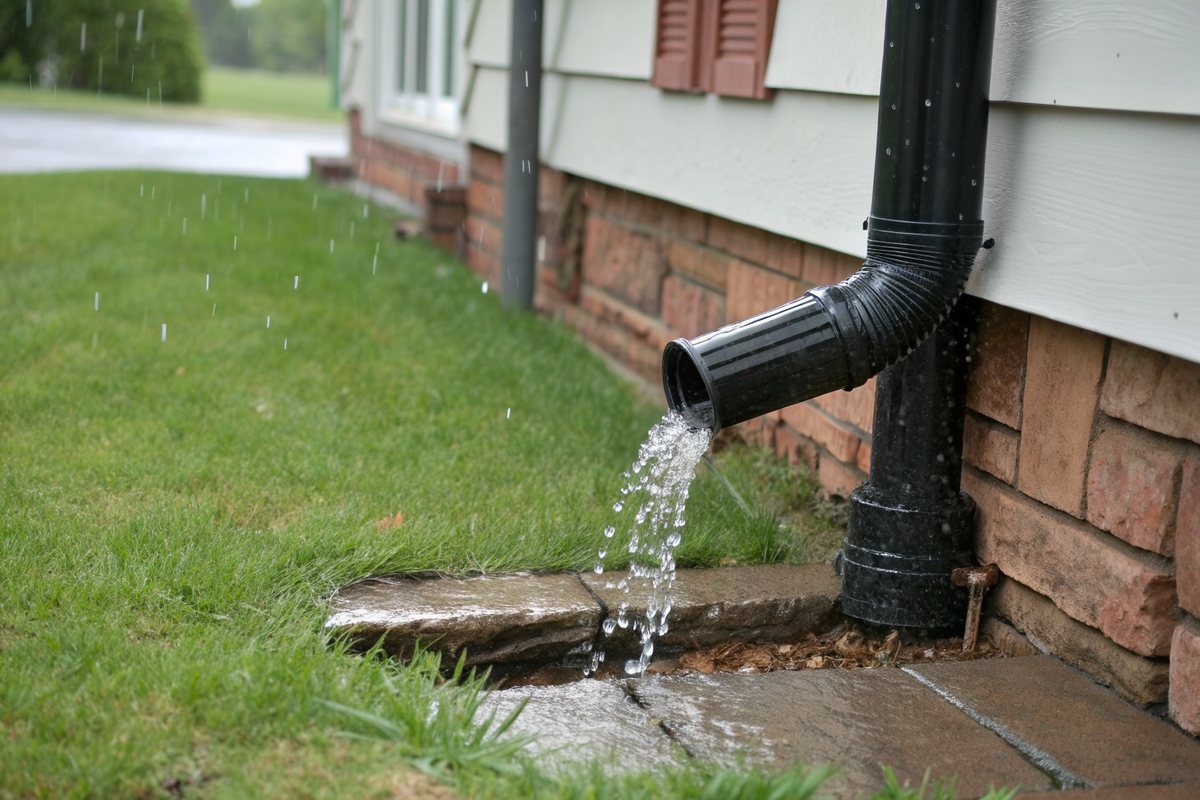
Drainage begins at the roof edge. An overflowing gutter or a downspout emptying at the wall drops runoff right where the basement is most exposed. Citizens Energy asks Indianapolis homeowners to end downspouts at least three feet from the building and never feed them into the sanitary sewer.
The Encyclopedia of Indianapolis describes glacial till, from clay to boulders, across the uplands between the major streams, and outwash sand and gravel in terraces along them. Clay-rich till can hold water against a wall; the looser riverside deposits can carry groundwater toward a foundation.
A French drain is perforated pipe in a gravel trench that intercepts water crossing the yard and carries it downhill, so the lot needs a lower spot. A footing drain does the same job at the foundation's base. If an old footing drain or downspout is tied into the sewer, separating it is plumbing for a licensed plumbing contractor.
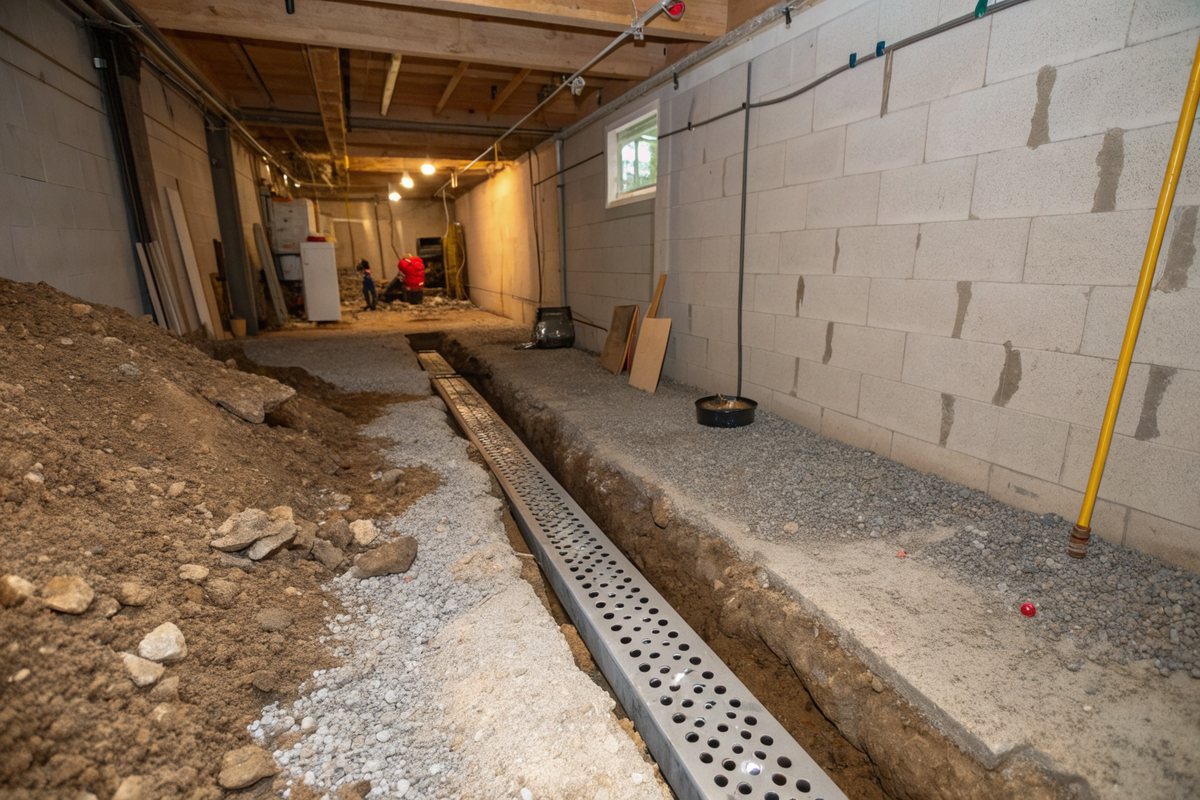
When water still reaches the floor, interior drain tile handles it from inside: the slab is opened in a strip along the wall, perforated pipe goes into a gravel bed, and the pipe carries water to a sump that pushes it outside. Nothing is dug outdoors, which can suit older houses like those that filled Meridian-Kessler in the 1920s and 1930s.
Window wells need a drain at the bottom, usually under gravel, or they fill and spill through the glass. At the curb, a storm grate kept clear of leaves gives runoff somewhere to go.
Typical Reasons to Request Basement Drainage
- Overflowing gutters. Cleaning, resizing or re-pitching gutters that spill during heavy rain.
- Downspouts at the wall. Extensions or underground outlets that carry roof water a good distance out, aimed away from the neighbors.
- Grading that runs backward. Soil built up so the yard falls away from the foundation.
- Seepage at the floor's edge. Interior drain tile along the wet walls, running to a sump.
- A soggy side yard. A French drain, where the lot has a lower spot to empty toward.
How Pricing Usually Works
| Cost row | Figure | Source (year) |
|---|---|---|
| Typical basement waterproofing project | about $3,000 to $10,000 (average about $5,000) | Fixr national (2026) |
| Interior perimeter drain, per linear foot | $40 to $120 | Fixr national (2026) |
| Sump pump installation | $600 to $2,500 | Fixr national (2026) |
| Epoxy crack injection, per crack | $250 to $1,000 | Fixr national (2026) |
| Waterproof paint or sealant, per sq ft | $1 to $8 | Fixr national (2026) |
The rows are national; no Indiana figures are published. Interior tile is priced per foot, so one wall costs a fraction of a full loop; gutter and grading work usually carries one job price. A licensed plumbing contractor prices backwater valves, sewer tie-ins and lateral repairs. Try the cost calculator or read the cost guide.
How a Contractor Approaches It
- Watch a storm. See where puddles form in the yard and where water appears below.
- The contractor's visit. Gutters, outlets and yard slope usually come before the floor.
- A written plan. It should list the walls covered, total feet of pipe, where each outlet ends, the materials and the total price.
- Permits. Foundation, excavation and structural repair in Indianapolis usually need a City permit, with plumbing or sewer work permitted separately; the contractor checks with the City at (317) 327-8700. In the nearby towns, the town's building office decides.
- The next downpour. The real test.

What You Get by Asking Here
Drainage trouble seldom has one cause, so a visit covering roof edge, yard and slab saves guesswork. Asking is free for you and brings you no payment or perk; contractors may pay this site a flat advertising fee. The site digs no trenches and never sees a contract.
For anything over $150, Indiana requires a written contract describing the work in reasonable detail, with the contractor's signature on it before yours. The Attorney General suggests a down payment of no more than one-third, and any change belongs in a signed, written change order.
Questions Homeowners Ask
Is it smarter to start outside before paying for drain tile?
Often. Clean gutters, longer downspouts and regraded soil cost less than interior pipe and keep water off the wall. If the basement still takes water after a season of storms, ask how many feet of tile each wet wall needs; length sets most of the price.
What if the water comes up the floor drain instead?
That usually means the sewer, not drainage. Citizens says Marion County's sewer system is combined, carrying stormwater and wastewater together, and overflows can begin with a quarter inch of rain. Backups get reported to Citizens Energy at (317) 924-3311. When the public line checks out fine, Citizens points owners to a licensed plumber, who can also discuss a backwater valve and its permit.
Didn't DigIndy solve this?
Citizens built the 28-mile DigIndy tunnels, finished in 2025, to divert at least 95% of sewer overflows away from the rivers. They don't stop basement backups. The line from your house to the main is generally the owner's to maintain, with Citizens deciding what falls inside its easement. Lateral permits go through Citizens (317-927-4444), and the work belongs to a licensed plumbing contractor, or a qualified sewer contractor for the stretch beyond the walls.
Related Services
Interior pipe has to empty somewhere, so see sump pump installation; a single damp patch may point to basement leak repair or foundation crack repair, and the whole basement to full basement waterproofing.
Talk to a Contractor About Drainage
Use the form to mention where the yard stays soggy, which wall takes water and whether storms or a thaw bring it on. One independent local contractor serving Indianapolis gets back to you about a visit and prices the work on paper; going ahead is up to you. Sending the form is the only step.