Foundation Crack Repair in Indianapolis, IN
Foundation crack repair in Indianapolis, Indiana covers thin lines in poured concrete, stepped breaks in block and loose brick joints, most of which matter because water follows them in. Fill in a short form and one independent local contractor can get in touch to look at each crack.
Not sure if we cover your area? Check now ↓
Basement Estimate Request
Takes about 30 seconds. One local contractor gets it and contacts you.
Your details go to one independent contractor who works around Indianapolis, IN, and that contractor gets in touch with you directly. See our Referral Marketing Disclosure.
When a Crack Lets Water In
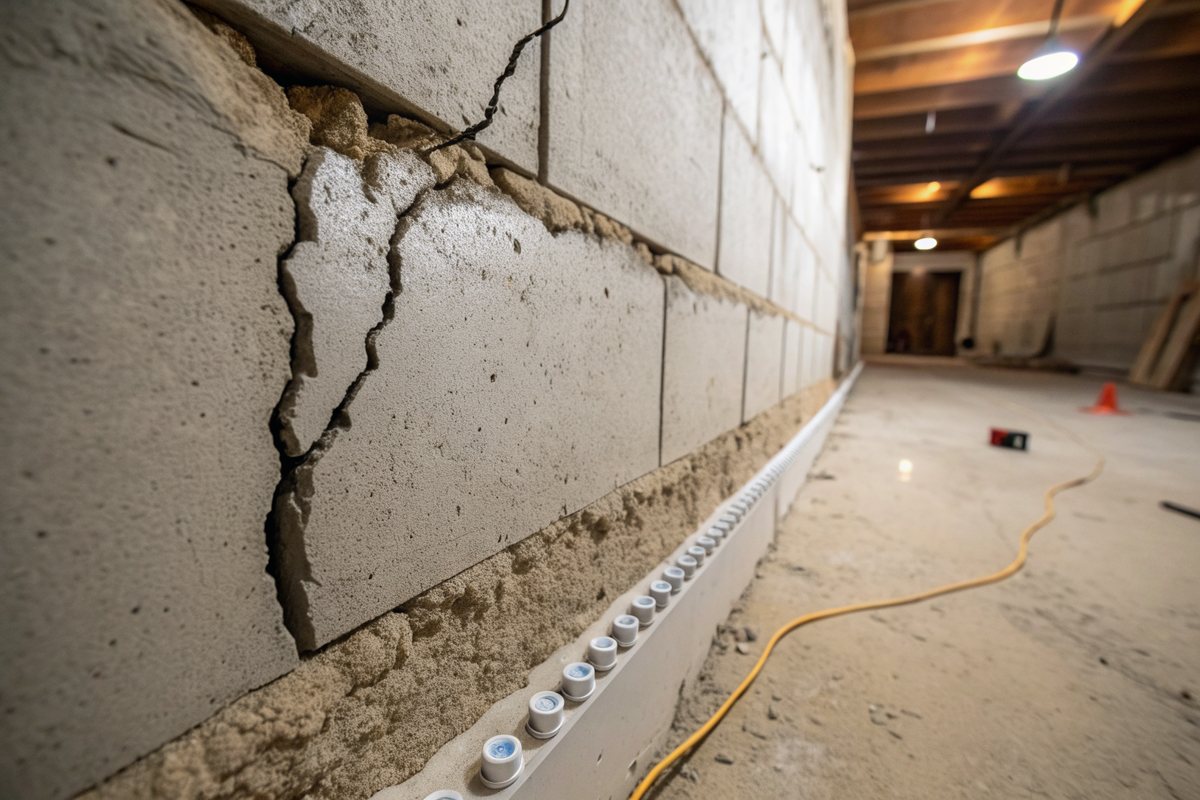
As poured concrete cures it loses a little volume, and that alone can leave a narrow vertical or angled crack in a wall of any age. The common repair is injection: small ports are fixed along the crack on the inside face, then epoxy or polyurethane is pressed in until the gap fills through the wall.
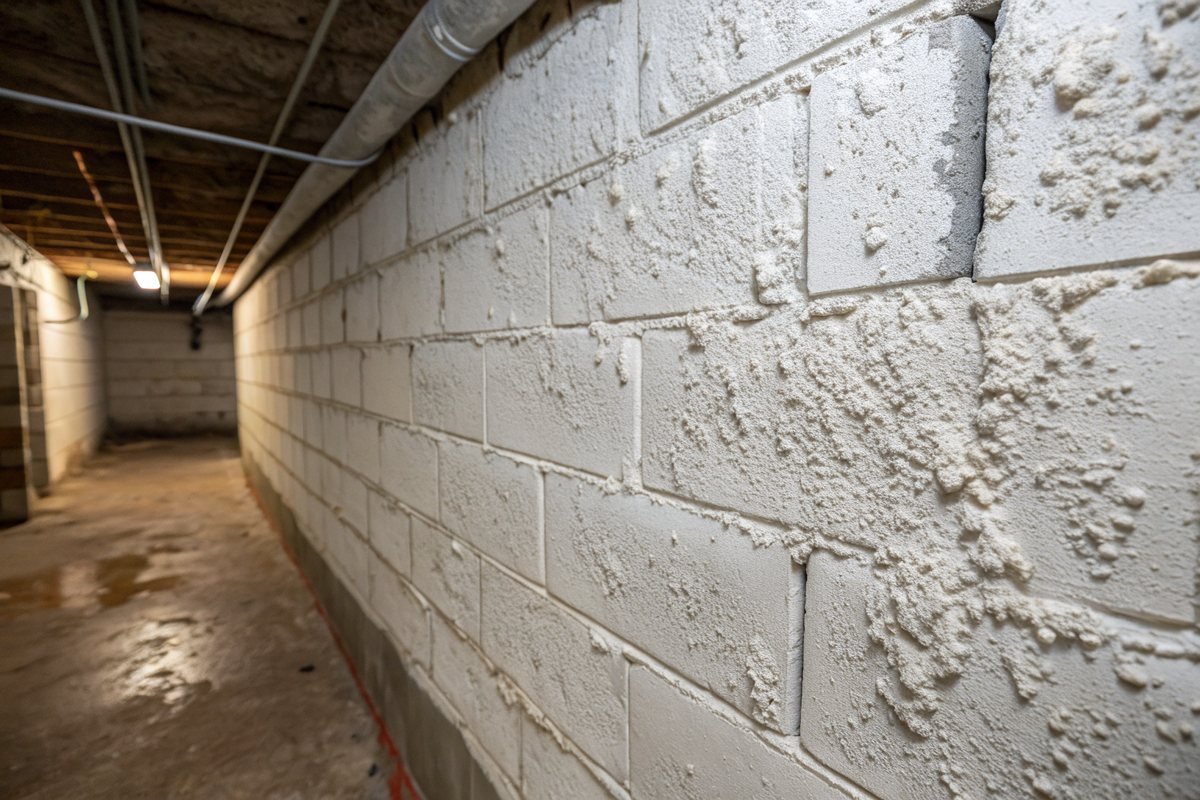
Block tends to part along its mortar in a stepped line, and brick joints soften over the decades. Resin would vanish into hollow cores and gaps behind brick, so those walls are usually repointed, with weak mortar raked out and fresh mortar packed in. Older city homes often stand on brick, block or poured walls; about a third of Indianapolis homes predate 1960 (Census survey data), and Irvington added Tudor Revival cottages in the 1920s and 1930s (Encyclopedia of Indianapolis).
Winter freeze-thaw can work at an open crack, and spring rain can soak clay-rich soil until it presses water against the wall.
A crack that runs sideways, keeps widening, or sits in a wall starting to bow or lean is worth having looked at soon.
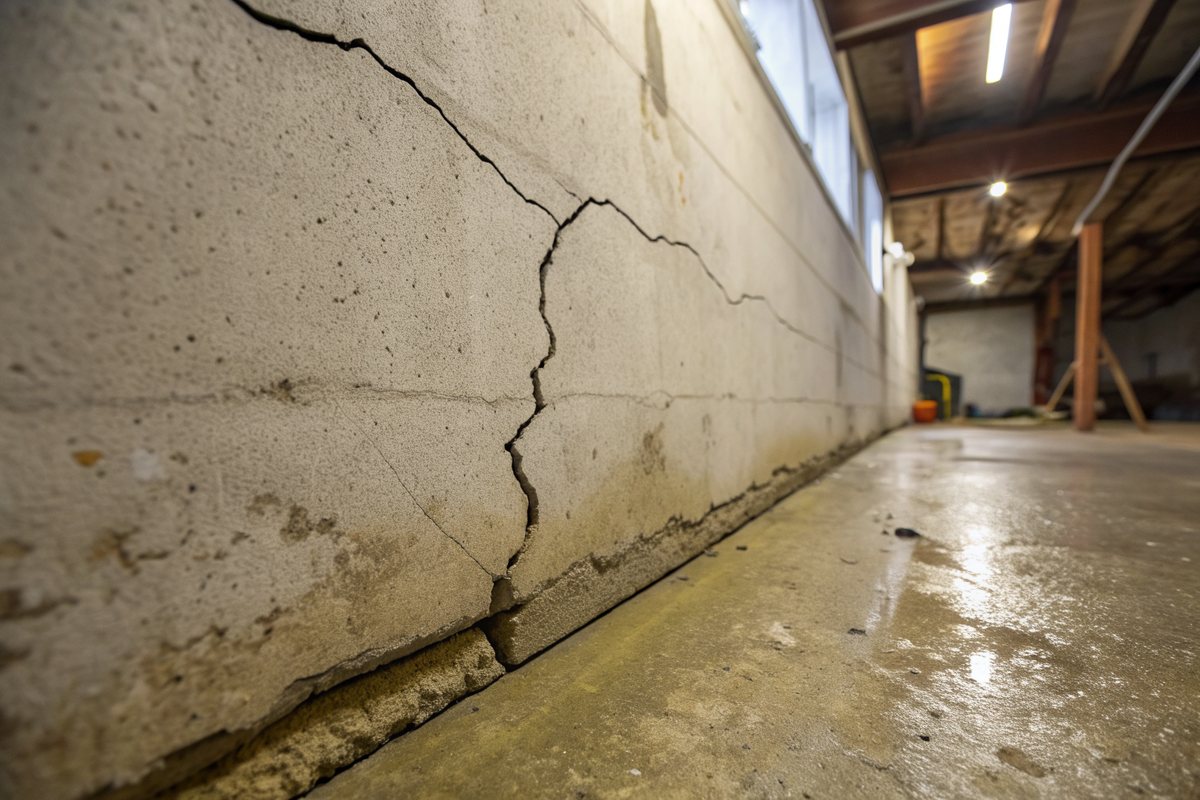
Typical Reasons to Request Foundation Crack Repair
- A poured-wall crack that seeps. Injected from the inside face.
- Stepped cracks in block. Opened joints refilled with new mortar.
- Crumbling brick joints. Repointing where old mortar has gone sandy.
- A crack under a downspout. Sealing, plus moving the outlet that keeps soaking that wall.
- A horizontal crack or a bowing wall. In any wall type, worth a closer look soon.
- A crack that keeps growing. Put the dates and widths in your request.
How Pricing Usually Works
| Cost row | Figure | Source (year) |
|---|---|---|
| Typical basement waterproofing project | about $3,000 to $10,000 (average about $5,000) | Fixr national (2026) |
| Interior perimeter drain, per linear foot | $40 to $120 | Fixr national (2026) |
| Sump pump installation | $600 to $2,500 | Fixr national (2026) |
| Epoxy crack injection, per crack | $250 to $1,000 | Fixr national (2026) |
| Waterproof paint or sealant, per sq ft | $1 to $8 | Fixr national (2026) |
For a crack or two, read the injection row: a national per-crack range (no Indiana source publishes one), not a figure from this site. Repointing, bracing and digging have no sourced figure; ask for separate lines. The cost guide covers what shifts a total.
How a Contractor Approaches It
- Measuring. Photos with a tape beside each crack.
- Naming the wall. Poured, block or brick decides between injection and repointing.
- Permits. In Indianapolis, structural repairs, excavation and other foundation work generally need a City permit, and plumbing or sewer work is permitted on its own by a licensed plumbing contractor; the contractor confirms which apply and files them, not you. Each nearby town has its own building office.
What You Get by Asking Here
Practical background, and contact from one independent local contractor if you request it. This free referral and advertising service doesn't inspect walls, diagnose cracks, write estimates or sign anything. A contractor can pay this site a flat sum to advertise, waived in the current trial, while homeowners never pay it or get anything from it.
With no statewide contractor license in Indiana, licensing is local: find out what the contractor carries for your address, see a certificate of liability insurance and ask for references. Indiana law puts any job over $150 in a written contract the contractor signs ahead of you, and you may have three business days to cancel one signed at your home.
Questions Homeowners Ask
What does a stair-step crack in a block wall mean?
Mortar gives way before block does, so when soil pushes or the wall settles slightly, the break steps along the joints. If the width holds steady over months, repointing is the usual answer; if it widens or the wall bulges, have it looked at soon.
Epoxy or polyurethane: which one is better?
Neither wins every time. Epoxy cures hard and bonds the two faces of the crack, while polyurethane expands and stays a little flexible, which can suit a crack that is wet or still moving. Ask which resin is proposed, why, and what the written warranty covers, including whether it transfers to a buyer.
Will a hardware-store patch kit do?
On a small, dry hairline it may hold a while. Surface patches rarely reach deep into the wall, so water under pressure tends to slip around them; if a crack still leaks after heavy rain, injection or repointing usually follows.
Where can I take a complaint about crack work?
Raise it with the contractor in writing first. Still stuck? Indiana's Attorney General handles consumer complaints through its Consumer Protection Division; dial 1-800-382-5516 or 317-232-6330. Questions about permitted work go to the office that issued the permit.
Related Services
For wider water problems, see basement leak repair, full basement waterproofing and basement drainage.
Next Step: A Crack Repair Estimate
List each crack, the wall it sits on and whether water comes through. One independent local contractor then contacts you about looking at it and pricing the work in writing; whether to proceed is up to you. A few lines in the form below will do.